Selective Internal Radiotherapy (SIRT)
Selective Internal Radiotherapy (SIRT) is a highly targeted treatment used to treat cancer that has spread to the liver. It delivers radiation directly to cancer cells while minimising damage to healthy liver tissue. This approach can help control cancer growth, improve symptoms, and in some cases help patients live longer or become eligible for other treatments.
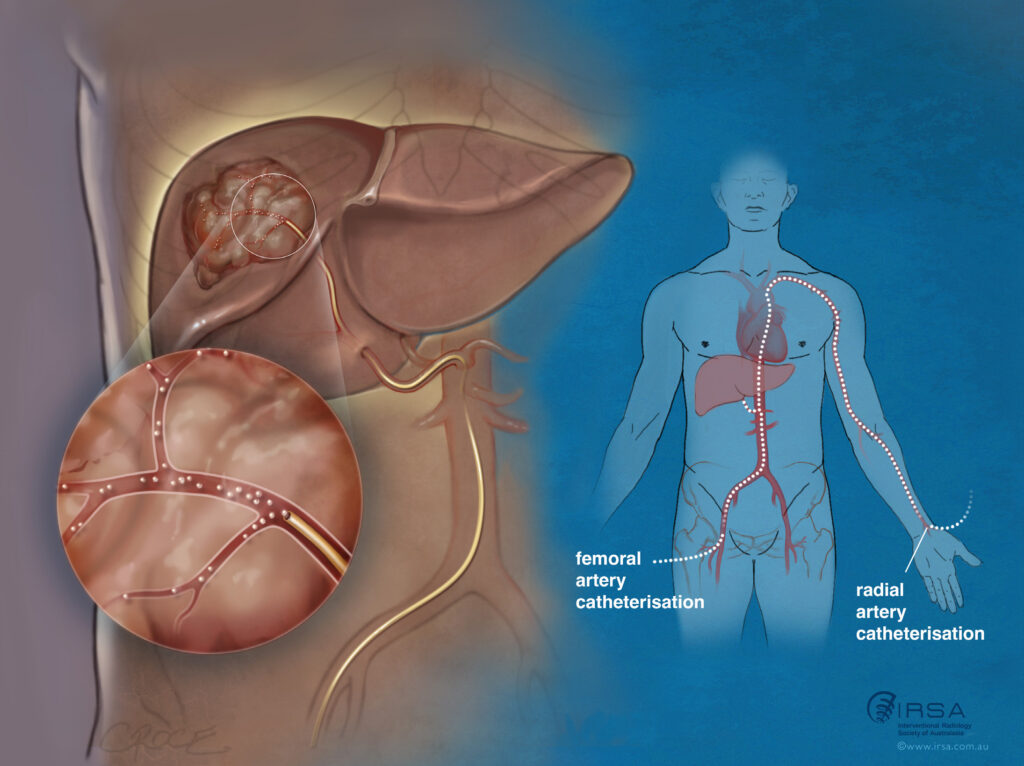
SIRT is a specialised form of internal radiation therapy. It involves delivering millions of tiny radioactive beads (called microspheres) directly into the blood vessels that supply liver tumours. These beads release a high dose of radiation precisely where the cancer is located, helping to shrink or control the tumour while limiting side effects to the rest of the body.
Because the treatment targets the tumour from within the liver, it is often an option when surgery is not possible or when other treatments alone are either insufficient or have become ineffective.
SIRT (in context of patients with bowel cancer) is not suitable for all patients. It has to be considered and used very judiciously.
SIRT may be considered for patients who have inoperable liver-predominant or liver-only disease. The best outcomes are seen in patients who do not have (or have very little) disease outside the liver. The burden of liver disease should be neither too little (will cause more damage to normal liver tissue) nor too high (the liver will not be able to withstand extensive radiation).
Patients with bowel cancer who are being considered for SIRT will typically have received and exhausted standard chemotherapy options. The SIRT specialist team will carefully assess whether suitability based on the type and distribution of cancer, liver function, overall health, and previous treatments. For further information, a Christie SIRT leaflet can be found here.
Typically, but not always, the SIRT procedure involves two episodes of hospitalisation; the first step is a SIRT angiogram, and the second step involves treatment administration. Most patients go home the same day or after a short hospital stay. However, as with any medical procedure, SIRT carries potential risks and complications, which is why careul patient selection and thorough counselling are essential.
Resources
Christie SIRT Leaflet